JAMB Biology 2013 past questions

48 questions from the 2013 paper, showing 1–20. Try each one, then open the solution to check your answer. Sign in to see the worked explanations.

  1. Biology2013Cell Biology
    1. The process in which complex substances are broken down into simpler ones is referred to as
    1. A.anabolism
    2. B.catabolism
    3. C.metabolism
    4. D.tropism
  2. Biology2013Classification of Living Things
    2. The organ which is sensitive to light in Euglena is the
    1. A.gullet
    2. B.flagellum
    3. C.chloroplast
    4. D.eyespot
  3. Biology2013Cell Biology
    3. The organelles present in cells that are actively respiring and photosynthesizing are
    1. A.lysosomes and ribosomes
    2. B.Golgi apparatus and endoplasmic reticulum
    3. C.nucleus and centrioles
    4. D.mitochondria and chloroplast
  4. Biology2013Animal Biology
    4. Taenia solium can be found in
    1. A.cow
    2. B.goat
    3. C.dog
    4. D.pig
  5. Biology2013Animal Biology
    5. The structure labelled II is the
    Figure for: The structure labelled II is the
    1. A.spermathecal pore
    2. B.cocoon
    3. C.clitellum
    4. D.chaetae
  6. Biology2013Ecology and Environment
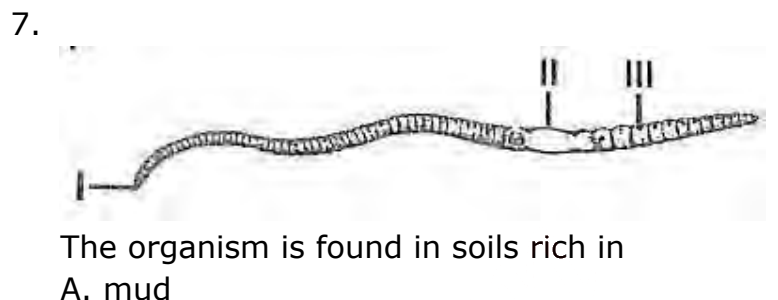
    6. The organism is found in soils rich in
    Figure for: The organism is found in soils rich in
    1. A.mud
    2. B.humus
    3. C.clay
    4. D.sand
  7. Biology2013Animal Biology
    7. Which of the following describes a characteristic of arthropods?
    1. A.The organism finds it easy to grow freely
    2. B.The organism has a pair of jointed appendages
    3. C.The body is not divided into a number of segments
    4. D.The body is covered by chitin
  8. Biology2013Animal Biology
    8. Which of the following distinguishes a butterfly from a moth?
    1. A.the wings of butterfly rest horizontally but those of moth rest vertically
    2. B.Both are active during the day
    3. C.they have similar antennae
    4. D.the abdomen of moth is fatter than that of butterfly
  9. Biology2013Animal Biology
    9. Which of the following types of feathers is used for flight in birds?
    1. A.Quill
    2. B.Filo plume
    3. C.Covert
    4. D.Down
  10. Biology2013Plant Biology
    10. The plants that grow in deserts or very dry areas are referred to as
    1. A.mesophytes
    2. B.hydrophytes
    3. C.epiphytes
    4. D.xerophytes
  11. Biology2013Classification of Living Things
    11. Which of the following is the simplest living organism?
    1. A.Paramecium
    2. B.Virus
    3. C.Amoeba
    4. D.Chlamydomonas
  12. Biology2013Animal Biology
    12. Proboscis is a structure that is mostly found in
    1. A.insects
    2. B.tapeworms
    3. C.amphibians
    4. D.molluscs
  13. Biology2013Plant Biology
    13. The structural adaptation of desert plants for water conservation is
    1. A.broad leaves with numerous stomata
    2. B.spongy mesophyll
    3. C.spiny leaves
    4. D.prominent stomata in leaves
  14. Biology2013Animal Biology
    14. The long and sharp clawed feet of birds is an adaptation for
    1. A.crushing seeds
    2. B.scooping mud
    3. C.tearing flesh
    4. D.grasping prey
  15. Biology2013Nutrition
    15. During the manufacture of food by plants, which of the following organism use energy from the sun?
    1. A.anabaena
    2. B.sulphur bacteria
    3. C.Nitrosomonas sp.
    4. D.Nitrobacter sp.
  16. Biology2013Plant Biology
    16. Movement of minerals and chemical compounds with a plant occurs during
    1. A.osmosis
    2. B.translocation
    3. C.transpiration
    4. D.diffusion
  17. Biology2013Nutrition
    17. The enzyme that is present in the saliva is
    1. A.rennin
    2. B.lipase
    3. C.pepsin
    4. D.ptyalin
  18. Biology2013Nutrition
    18. Plants that have special devices for trapping and digesting insects are
    1. A.carnivorous
    2. B.symbiotic
    3. C.parasitic
    4. D.saprophytic
  19. Biology2013Cell Biology
    19. The process of transforming the chemical energy of cellular fuels into the high energy bonds of ATP in plants is
    1. A.autotropism
    2. B.photosynthesis
    3. C.photolysis
    4. D.respiration
  20. Biology2013Classification of Living Things
    20. Fungi are referred to as heterotrophs because they
    1. A.are filamentous
    2. B.lack chlorophyll
    3. C.have mycelium
    4. D.lack roots

Other JAMB Biology papers