JAMB Biology 2012 past questions

46 questions from the 2012 paper, showing 21–40. Try each one, then open the solution to check your answer. Sign in to see the worked explanations.

  1. Biology2012Plant Biology
    21. Which of the following is involved in secondary thickening in plants?
    1. A.Collenchyma and xylem cells
    2. B.Vascular cambium
    3. C.Vascular cambium and cork cambium
    4. D.Cork cambium and sclerenchyma
  2. Biology2012Plant Biology
    22. An example of a fruit that develops from a single carpel is
    1. A.okro
    2. B.tomato
    3. C.bean
    4. D.orange
  3. Biology2012Plant Biology
    23. Plant growth can be artificially stimulated by the addition of
    1. A.gibberellin
    2. B.kinin
    3. C.abscisic acid
    4. D.ethylene
  4. Biology2012Human Biology and Physiology
    24. The autonomic nervous system consists of neurons that control the
    1. A.voluntary muscles
    2. B.heart beat
    3. C.tongue
    4. D.hands
  5. Biology2012Ecology and Environment
    25. Plants of temperate origin can be grown in tropical areas in the vegetation zones of the
    1. A.rain forest
    2. B.Guinea savanna
    3. C.Sudan savanna
    4. D.montane forest
  6. Biology2012Ecology and Environment
    26. The water cycle is maintained mainly by
    1. A.evaporation of water in the environment
    2. B.evaporation and condensation of water in the environment
    3. C.condensation of water in the environment
    4. D.transpiration and respiration in plants
  7. Biology2012Ecology and Environment
    27. Organisms living in an estuarine habitat are adapted to
    1. A.withstand wide fluctuations in temperature
    2. B.survive only in water with low salinity
    3. C.withstand wide fluctuations in salinity
    4. D.feed only on phytoplankton and dead organic matter
  8. Biology2012Ecology and Environment
    28. The presence of stilt roots, pneumatophores, sunken stomata and salt glands are adaptive features of plants found in the
    1. A.tropical rainforest
    2. B.mangrove swamps
    3. C.grassland
    4. D.montane forest
  9. Biology2012Ecology and Environment
    29. Which of the following animals can exist solely on the water they get from food and metabolic reactions?
    1. A.forest arboreal dweller
    2. B.Desert dwellers
    3. C.forest-ground dweller
    4. D.rainforest dwellers
  10. Biology2012Ecology and Environment
    30. The most likely first colonizers of a bare rock are
    1. A.mosses
    2. B.ferns
    3. C.lichen
    4. D.fungi
  11. Biology2012Ecology and Environment
    31. The carrying capacity of a habitat is reached when the population growth begins to
    1. A.increase slowly
    2. B.increase exponentially
    3. C.slow down
    4. D.remain steady
  12. Biology2012Ecology and Environment
    32. The abiotic factors that control human population include
    1. A.disease and famine
    2. B.space and rainfall
    3. C.flooding and earthquake
    4. D.temperature and disease
  13. Biology2012Ecology and Environment
    33. An indigenous method of renewing and maintaining soil fertility is by
    1. A.clearing farms by burning
    2. B.planting one crop type
    3. C.adding inorganic fertilizers yearly
    4. D.crop rotation and shifting cultivation
  14. Biology2012Human Biology and Physiology
    34. The diseases caused by water-borne pathogens include
    1. A.gonorrhoea and poliomyelitis
    2. B.typhoid and syphilis
    3. C.tuberculosis and cholera
    4. D.typhoid and cholera
  15. Biology2012Genetics and Evolution
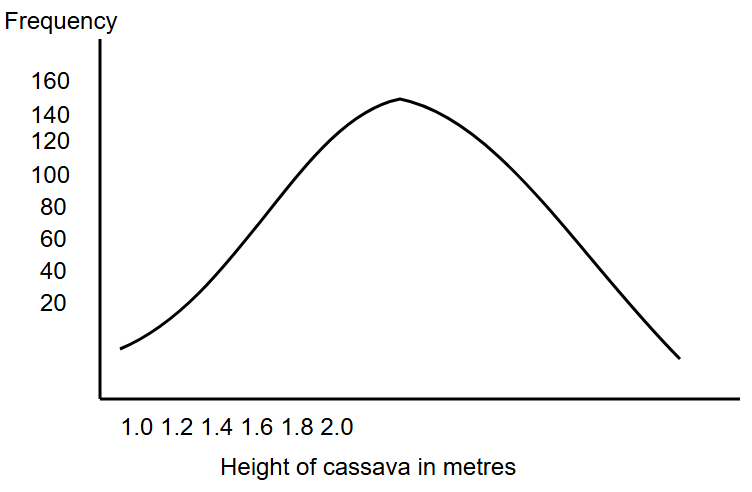
    35. The graph illustrates
    Figure for: The graph illustrates
    1. A.the highest frequency for height of 2 metres
    2. B.a discontinuously varying character
    3. C.a continuously varying character
    4. D.total yield in a cassava farm
  16. Biology2012Human Biology and Physiology
    36. Which of the following is true in blood transfusion?
    1. A.person of blood group AB can donate blood only to another person of blood group AB
    2. B.persons of blood groups A and B can donate or receive blood from each other
    3. C.A person of blood group AB can receive blood only from persons of blood group A or B
    4. D.A person of blood group O can donate only to a person of blood group O
  17. Biology2012Genetics and Evolution
    37. A yellow maize is planted and all the fruits obtained are of yellow seeds. When they are cross-bred, yellow seeds and white seeds are obtained in a ratio 3:1. The yellow seed is said to be
    1. A.non-heritable
    2. B.sex-linked
    3. C.a recessive trait
    4. D.a dominant trait
  18. Biology2012Genetics and Evolution
    38. When a colour-blind man marries a carrier woman. What is the probability of their offspring being colour blind?
    1. A.25%
    2. B.50%
    3. C.75%
    4. D.100%
  19. Biology2012Genetics and Evolution
    39. The correct base pairing for DNA is
    1. A.adenine → thymine and guanine → cytosine
    2. B.adenine → guanine and thymine → cytosine
    3. C.adenine → cytosine and guanine → thymine
    4. D.adenine → adenine and cytosine → cytosine
  20. Biology2012Ecology and Environment
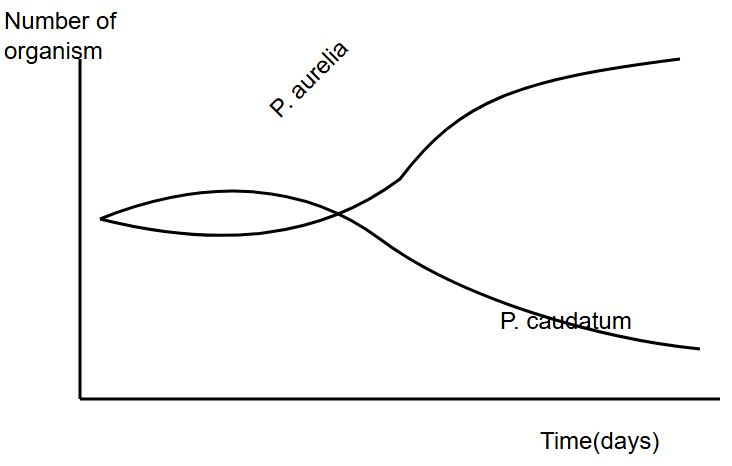
    40. The type of interaction shown is referred to as
    Figure for: The type of interaction shown is referred to as
    1. A.interspecific competition
    2. B.intraspecific competition
    3. C.mutualism
    4. D.cooperation

Other JAMB Biology papers